 how-to
How to Fix Patchy Thin Lawn: A 2026 Repair Guide
Table of Contents
- Diagnosing Why Your Grass Is Thin and Patchy
- Soil Prep and Debris Removal Before You Repair
- Lawn Aeration Benefits for Compacted Soil
- When to Overseed Lawn for the Best Germination
- Best Grass Seed for Bare Spots and Thin Turf
- Watering, Fertilizing, and Mowing New Seed
- Common Mistakes That Keep Lawns Patchy
- Frequently Asked Questions
Last Updated: September 28, 2026
Diagnosing Why Your Grass Is Thin and Patchy
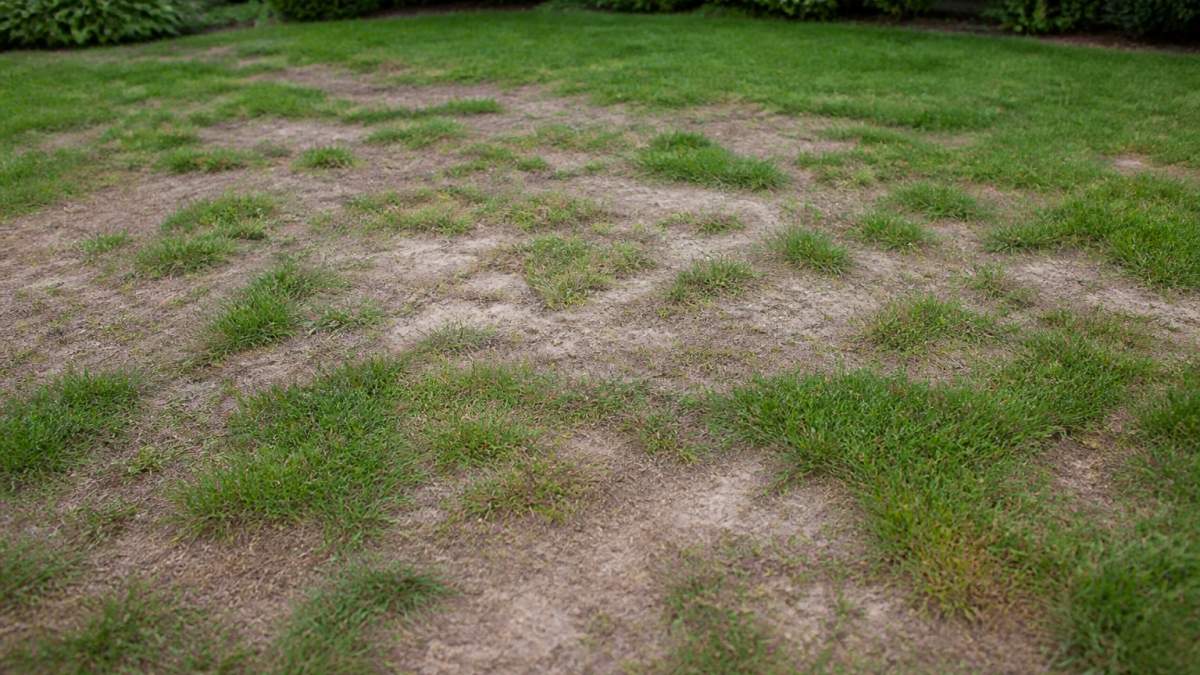
A patchy thin lawn rarely has one cause. Most thin lawns suffer from two or three problems stacked on top of each other, which is why a single bag of fertilizer from the big box store never fixes them.
Common Causes: Compaction, Shade, Pests, and pH
Four problems cause most thin lawns, and they often overlap.
- Soil compaction: Foot traffic and clay soil squeeze out air pockets roots need.
- Shade: Tree canopy blocks the sunlight grass needs to thicken.
- Pests and pet damage: Grubs, chinch bugs, and dog urine kill patches fast.
- Soil pH imbalance: Grass can't absorb nutrients when pH drifts too far from neutral.
How to Test Your Soil Before You Treat Anything
Test soil pH and nutrients before buying a single bag of fertilizer. A basic soil test kit or a lab sample tells you what your lawn actually needs.
Soil Prep and Debris Removal Before You Repair
Clear the surface before you seed or aerate. Debris and thatch block seed-to-soil contact, and seed that never touches soil never germinates. This is the step most homeowners rush, and it is the reason a repair that looks fine on day three fails by day twenty.
Measure Thatch Before You Dethatch
Thatch is the brown, spongy layer of dead stems, roots, and runners sitting between the green blades and the soil surface. A thin thatch layer, under half an inch, is actually beneficial: it cushions the crown, slows moisture loss, and insulates roots. The problem starts when thatch builds past half an inch, because water, air, and seed all stop reaching the soil.
Match the Tool to the Job
- Leaf rake or hard rake: Best for light leaf litter and small bare spots. Cheap, slow, and fine for a few square feet.
- Dethatching rake: A stiff-tined manual rake that pulls thatch without ripping roots. Good for small lawns and spot work.
- Power dethatcher (dethatcher rake or verticutter): A walk-behind machine with spinning tines or flail blades that slices through thatch. Rent one for a full-lawn job. Set the tines shallow on the first pass, going too deep scalps the lawn and exposes bare soil.
- Lawn vacuum or bagging mower: The fastest way to collect the thatch and debris you just loosened. Skipping collection leaves the material to mat back down.
The Prep Sequence
Work in this order, and don't skip ahead:
- Mow low first. Cut the lawn to about 1.5 to 2 inches before dethatching so the tines reach the thatch instead of the blades. Bag the clippings.
- Rake away leaves, rocks, and dead grass. Anything sitting on the surface blocks seed-to-soil contact.
- Dethatch if the layer exceeds half an inch. Run a power dethatcher in two directions, north-south, then east-west, for even coverage.
- Collect the debris. Rake or vacuum the loosened thatch. Leaving it in place defeats the purpose.
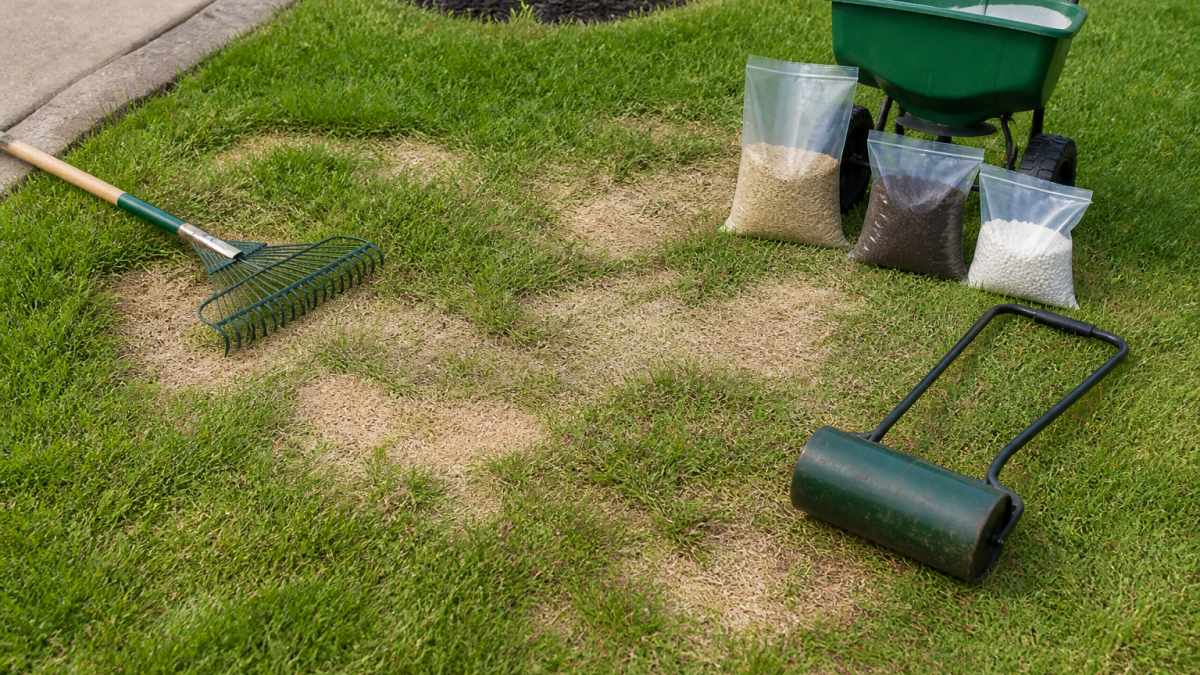
- Loosen the top inch of soil in bare spots. A hard rake or a garden weasel opens the surface so seed can settle into the soil rather than perch on top of it.
- Level dips where water pools. Fill low spots with a topdressing mix of compost and sand, then rake it flush with the surrounding grade. Standing water drowns seed and rots roots.
Skip this step and you'll waste seed. It's that simple.
Lawn Aeration Benefits for Compacted Soil
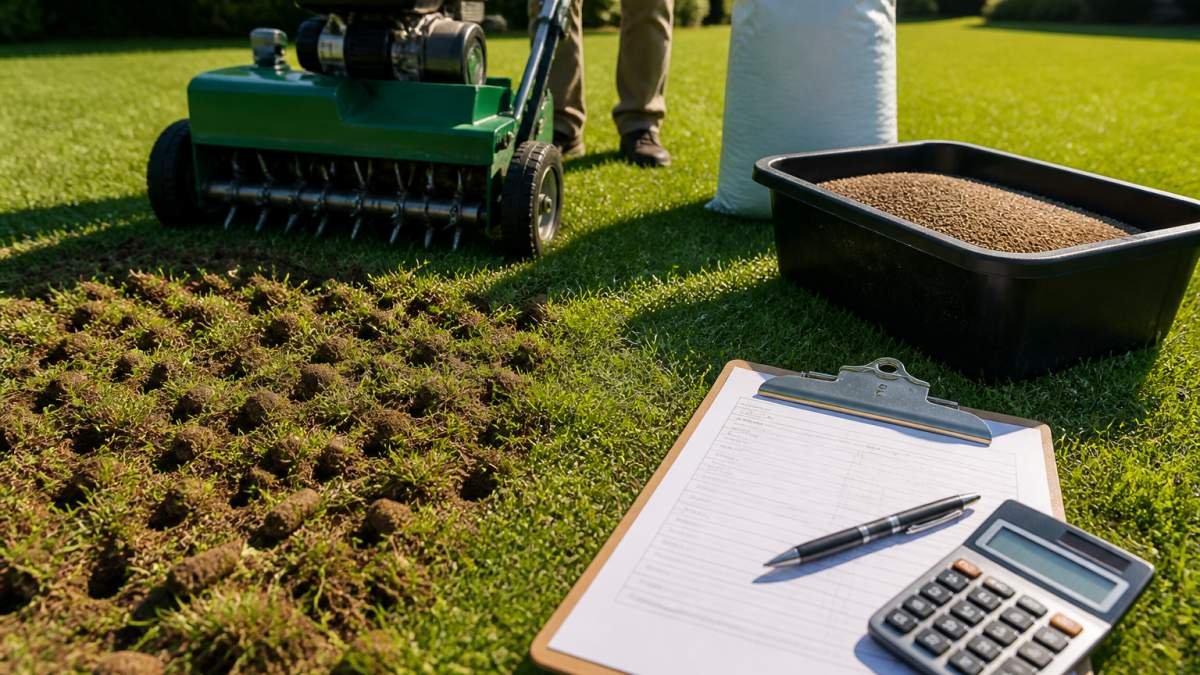
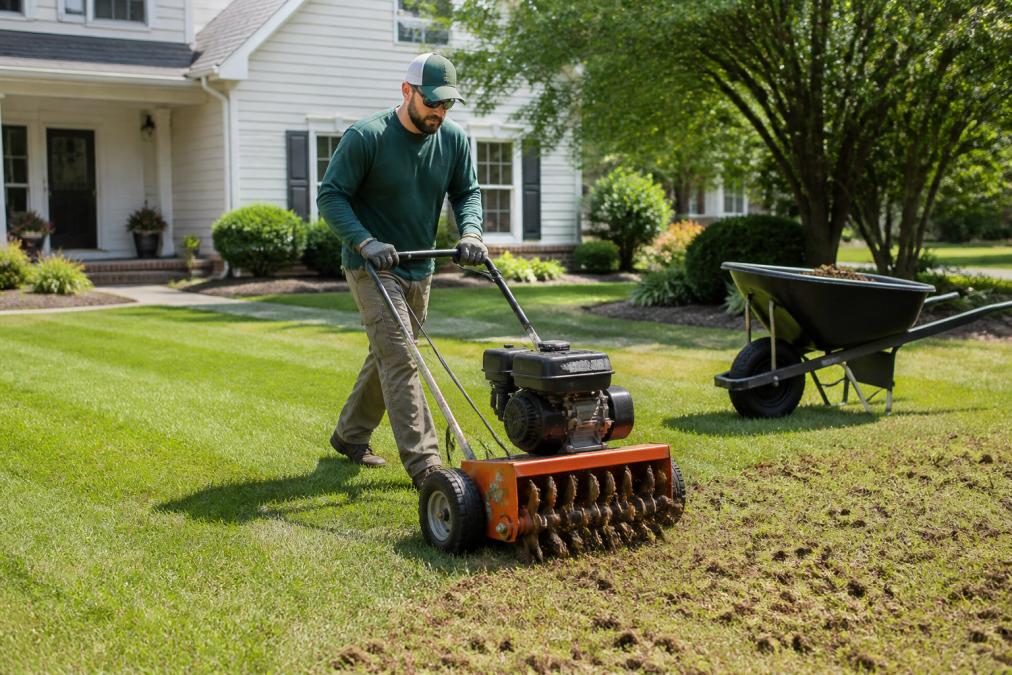
The main lawn aeration benefits are better water flow, stronger roots, and improved seed-to-soil contact. Core aeration pulls small plugs of soil from the ground, opening channels that air, water, and nutrients can reach. Compacted soil is the most common hidden cause of a patchy thin lawn. When soil compacts, roots stay shallow and grass thins out under stress.
Core Aeration vs. Spike Aeration
These are not interchangeable, and the difference matters for a repair job.
- Core aeration (plug aeration): Hollow tines pull actual plugs of soil out of the ground and deposit them on the surface. This relieves compaction because soil volume is physically removed, not just pushed aside. It is the standard for overseeding because the holes give seed a place to land and germinate.
- Spike aeration: Solid tines or spikes punch holes without removing soil. It is faster and cheaper, but it can actually worsen compaction in clay soil by pushing soil particles tighter around the hole. Use it for light relief on sandy or loamy soil, not as a repair tool.
How Many Passes, and When
For most lawns, aerate once a year. Heavy clay soil or heavy foot traffic may need two passes. A common pattern is to run the aerator in one direction, then make a second pass perpendicular to the first. On severely compacted clay, a third pass may be warranted.
- Cool-season grass: Early fall, ideally the same week you overseed. The holes double as seed beds.
- Warm-season grass: Late spring to early summer, once the lawn is actively growing.
- Avoid: Mid-summer heat stress and the weeks right before dormancy.
What to Do With the Plugs
Leave the plugs on the surface. They look messy for a week or two, but they break down with rain and mowing, returning organic matter and microbes to the soil. If the plugs bother you, drag a piece of chain-link fence or a weighted mat over them to crumble them into the canopy. Do not rake them up and throw them away, you are removing the exact soil biology you just loosened.
DIY Tool vs. Rental: The Budget Trade-Off
- Manual core aerator (plugger): A foot-powered tool with two to four hollow tines. Costs the least, works fine for a few hundred square feet of bare spots, and is genuinely exhausting on a full lawn. Best for spot repairs.
- Tow-behind plug aerator: A drum of hollow tines you pull behind a riding mower or tractor. Moderate cost, good coverage, but it needs weight to penetrate clay and it tears on tight turns.
- Walk-behind core aerator (rental): The same class of machine a lawn service uses. Rentals are typically priced by the half-day or day, and the machine is heavy and awkward to load. For a lawn over a few thousand square feet, this is usually the fastest path to a real fix.
- Professional service: A crew arrives with commercial equipment, aerates, and often overseeds or topdresses in the same visit. Higher upfront cost, but it removes the equipment logistics and the risk of doing it wrong.
Pair aeration with a topdressing of compost or a compost-sand mix. The compost works its way into the aeration holes, improving soil structure from the inside out. That combination, core aeration plus topdressing, is the single most effective mechanical fix for a chronically thin, compacted lawn.
When to Overseed Lawn for the Best Germination
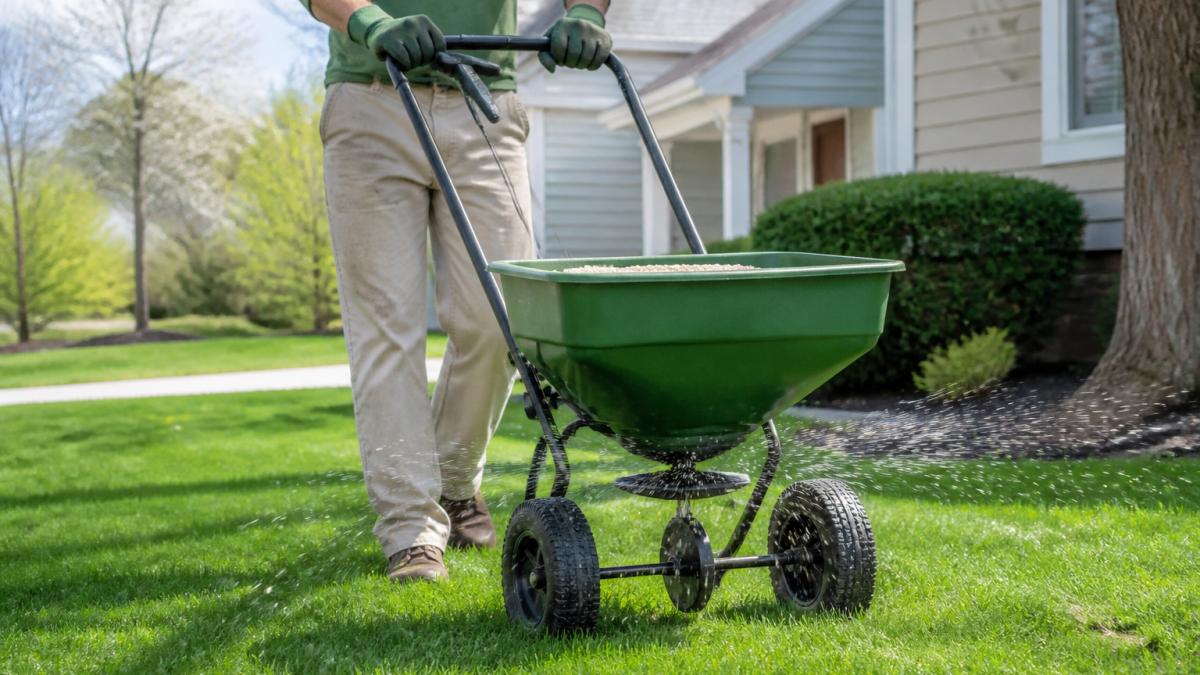
The best time to overseed lawn is early fall for cool-season grass and late spring for warm-season grass. Fall gives new seed warm soil, cool air, and fewer weeds to compete with.
Here's the general window by grass type:
| Grass Type | Best Overseeding Window | Why |
|---|---|---|
| Cool-season grass | Early fall | Warm soil, cool air, low weed pressure |
| Warm-season grass | Late spring | Soil has warmed enough to germinate |
| Transition zone | Early fall | Avoids both summer heat and winter frost |
Best Grass Seed for Bare Spots and Thin Turf
Match the seed to your existing grass and your sun conditions. The best grass seed for bare spots is the same species already growing in your lawn, so the repair blends in.
Seed selection basics:
- Sunny areas: Tall fescue or Kentucky bluegrass.
- Shaded areas: Fine fescue or shade-tolerant blends.
- High traffic: Perennial ryegrass for quick germination.
Watering, Fertilizing, and Mowing New Seed
New seed needs steady moisture and low-stress mowing to survive its first month. Get this stage wrong and germination stalls, no matter how good the seed was.
Irrigation Schedule and Seed-to-Soil Contact
Water lightly twice a day for the first two weeks. Keep the top inch of soil moist, never soaked.
- Week 1-2: Light watering, two to three times daily.
- Week 3-4: Deepen watering, once daily.
- Week 5+: Water deeply two to three times per week.
Mowing Height and Nitrogen Fertilizer Timing
Keep mowing height at 3 to 4 inches for cool-season grass. Taller blades shade the soil, which helps new seed and crowds out weeds.
Common Mistakes That Keep Lawns Patchy
- Seeding over compacted soil without aerating first.
- Watering too deeply too soon, which washes seed away.
- Mowing too short, which stresses new growth.
- Skipping the soil test and guessing at pH.
- Ignoring shade and tree root competition.
Professional help makes sense when a lawn has failed multiple DIY attempts. Green Up Specialized Lawn Care handles core aeration, overseeding, topdressing, and disease control for homeowners across the greater Columbus area.
Frequently Asked Questions
How do I rejuvenate a patchy lawn without starting over?
You can usually repair a patchy thin lawn without a full renovation. Start by testing soil pH and checking for compaction or thatch. Then core aerate to relieve compaction, spread a quality seed blend matched to your grass type, and keep the area consistently moist for two to three weeks. Overseeding combined with a light topdressing gives seed-to-soil contact and helps thin turf fill in without tearing out existing grass.
What is the best time of year to overseed a lawn?
For cool-season grass, early fall is ideal because soil is warm, air is cool, and weed pressure drops. Warm-season grass does best in late spring to early summer when soil temperatures stay above 65 degrees Fahrenheit. Overseeding at the wrong time exposes seed to heat stress or frost, which lowers germination rates. Timing matters more than any single product you buy.
Can patchy grass grow back on its own?
Sometimes, but only if the underlying cause is removed. If thin grass is caused by temporary drought or light foot traffic, it can recover with watering and rest. However, bare spots from soil compaction, shade, or nutrient deficiency will not fill in on their own. Those areas need aeration, overseeding, and a soil amendment to support new growth before turf density improves.
How do I prepare the soil for lawn repair?
Clear debris, leaves, and dead thatch first. Test soil pH and adjust with lime or sulfur if needed. Core aerate to open compacted soil, then topdress with a thin layer of compost or topsoil to improve seed-to-soil contact. A seed starter fertilizer low in nitrogen supports root development. Water the area lightly before seeding so the soil is moist but not saturated when you spread the seed.
A thin, patchy lawn can feel like a losing battle when you're treating symptoms instead of causes. Green Up Specialized Lawn Care offers owner-operated lawn care, including fertilization, weed control, core aeration, overseeding, and disease control, tailored to your lawn's actual needs. Get started with Green Up Specialized Lawn Care and build a thicker, healthier lawn season after season.