 how-to
When to Apply Spring Fertilizer: A 2026 How-To Guide
Table of Contents
- When to Apply Spring Fertilizer: The Soil Temperature Rule
- Signs Your Lawn Needs Fertilizer
- Cool-Season vs. Warm-Season Grasses: Two Different Spring Timelines
- Why Core Aeration Helps Root Growth Before You Fertilize
- Fertilizing Before or After Rain: Getting Soil Moisture Right
- Integrating Spring Fertilizer With Pre-Emergent Herbicide
- Spreader Settings and Calibration: The Step Most Homeowners Skip
- Common Mistakes to Avoid
- Frequently Asked Questions
Last Updated: October 2, 2026
When to Apply Spring Fertilizer: The Soil Temperature Rule
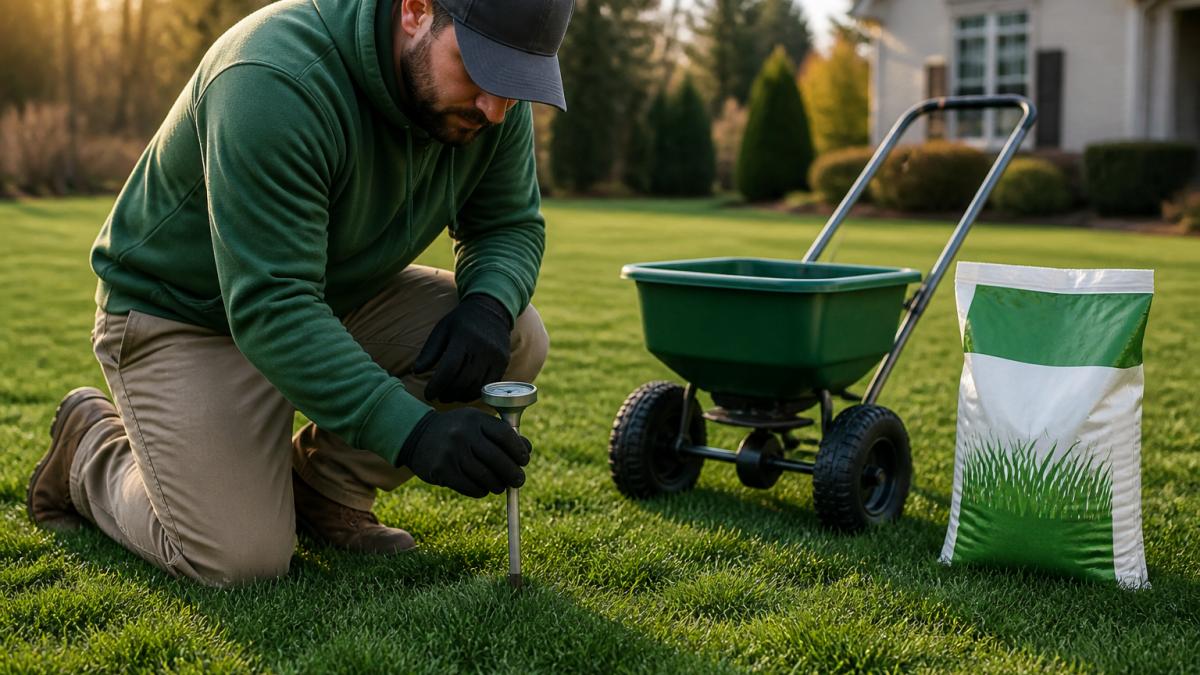
The most reliable signal for when to apply spring fertilizer is soil temperature, not the calendar. Wait until soil reaches 55°F at 4 inches deep.
Why 55°F at 4 Inches Deep Is the Trigger
Soil temperature controls whether grass roots can take up nitrogen. Below 55°F, roots are dormant. They cannot absorb what you spread.
How to Check Your Soil Temperature Without a Lab
A $15 soil thermometer from any garden center does the job:
- Push the probe 4 inches into the soil
- Leave it for 5 minutes
- Read the temperature
- Repeat in three or four spots across the lawn
- Average the readings
Signs Your Lawn Needs Fertilizer
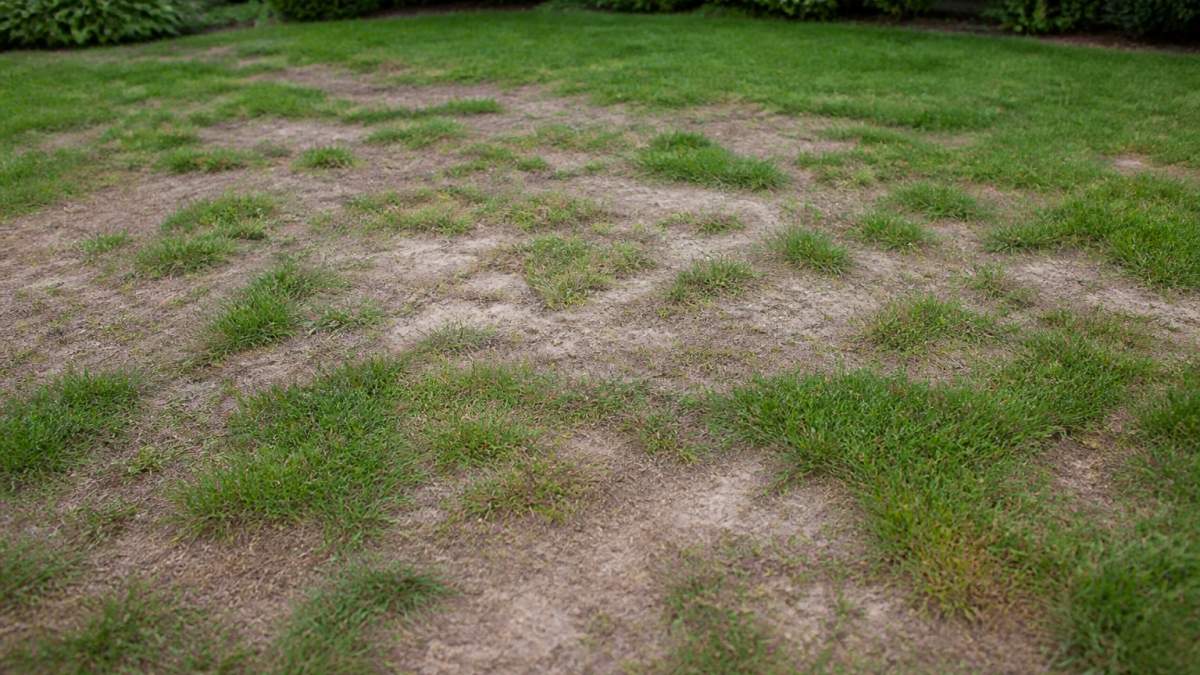
Your lawn signals hunger in measurable ways, but you must separate true nutrient deficiency from dormancy, disease, or drought stress. Fertilizing a dormant or stressed lawn wastes product and can worsen the problem.
The Difference Between Dormancy and Deficiency
Dormancy is a survival state. Both cool- and warm-season grasses turn tan or brown from the crown down in winter, and color returns from the crown outward when soil warms. If your lawn is uniformly tan and soil is still below the trigger temperature for your grass type, that is dormancy, not hunger, fertilizer will not fix it.
Measurable Signals to Watch
- Growth rate. A lawn that normally needs cutting every five to seven days in spring but stretches to ten or more is signaling slow growth.
- Color uniformity. Compare shaded versus sunny zones; patchy color often points to soil variation, not a blanket nutrient shortage.
- Recovery speed. Healthy grass blades regrow tips within a day or two of mowing; slow recovery suggests a lack of nitrogen.
- Thatch depth. More than half an inch of brown, spongy material between green blades and soil blocks water and nutrient movement.
- Weed pressure. Weeds like dandelion and clover thrive where grass is thin. Their presence is a symptom of weak turf, not a cause.
Why a Soil Test Beats Visual Guessing
Visual cues tell you something is off; a soil test tells you what to do about it. Your county extension office offers soil testing for a modest fee, often about the cost of a bag of fertilizer, with a report covering pH, phosphorus, potassium, and often micronutrients, plus a recommended nutrient ratio for your grass type.
The Two-Week Rule
If your lawn has greened up and two weeks pass with no color improvement, test rather than guess. Do not stack a second application on the first; over-application in spring is the fastest route to fertilizer burn and runoff.
Cool-Season vs. Warm-Season Grasses: Two Different Spring Timelines
Cool-season and warm-season grasses wake up at different times. Treating them the same is a common, costly mistake.
| Grass Type | Soil Temp Trigger | Typical Timing | First Feeding Goal |
|---|---|---|---|
| Cool-season | 55°F | Late March to mid-April | Push green-up and root growth |
| Warm-season | 65°F | Late April to May | Support early shoot growth |
The Best Fertilizer for Cool-Season Grass in Early Spring
The best fertilizer for cool-season grass in early spring is a slow-release granular blend with a nitrogen-heavy ratio, something like 20-5-10. The first number is nitrogen, which drives blade growth and deep green color.
What Warm-Season Lawns Need Instead
Warm-season lawns need patience first, then a lighter nitrogen application once they fully green up. A half-rate first feeding is safer than a full one while the lawn is still waking.
Why Core Aeration Helps Root Growth Before You Fertilize
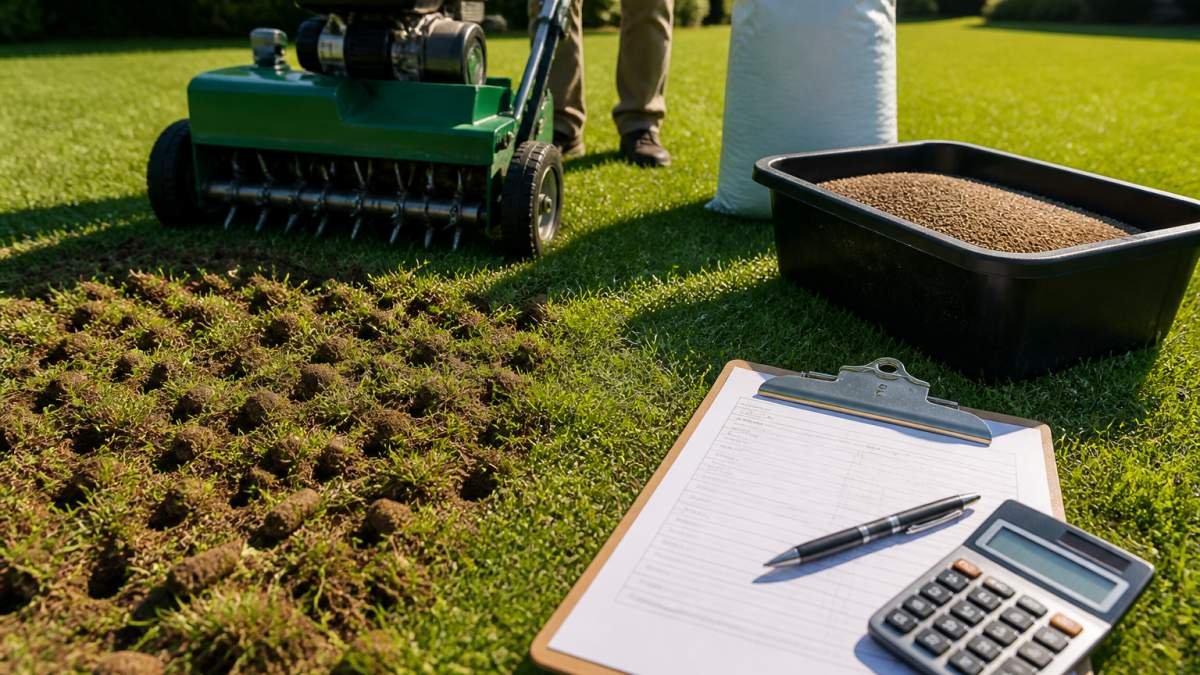
Core aeration pulls small plugs of soil from the lawn, opening channels for air, water, and fertilizer to reach the roots.
Fertilizing Before or After Rain: Getting Soil Moisture Right
Fertilize before light rain, not after heavy rain. A gentle soaking moves granular fertilizer into the soil; a downpour washes it into storm drains, wasting money and harming water quality.
Integrating Spring Fertilizer With Pre-Emergent Herbicide
This is the timing puzzle most spring lawn care guides skip: you need to feed the grass and stop crabgrass at roughly the same time, but the two products do not always play well together. Getting the sequence right prevents the most common spring failure, a lawn that greens up beautifully and then gets swallowed by weeds in June.
Why the Windows Overlap
Crabgrass seed germinates when soil holds around 55°F at one to two inches deep for several consecutive days, the same temperature that triggers root activity in cool-season grass. So the ideal window for your first nitrogen application and your pre-emergent is often the same week.
The Seeding Decision Comes First
Before you combine anything, answer one question: are you overseeding this spring?
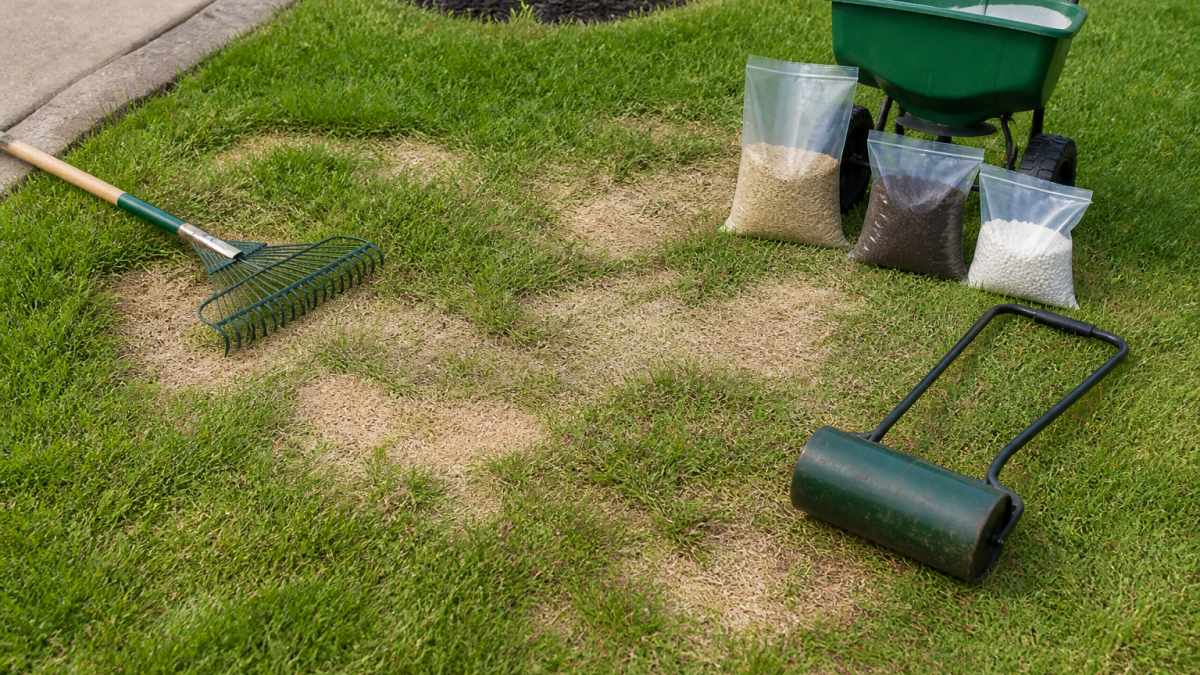
- If you are overseeding: Do not apply a pre-emergent that contains a germination inhibitor. Most traditional pre-emergents will stop your grass seed from sprouting along with the crabgrass. You have two options. Either skip the pre-emergent and accept some weed pressure while your new seed establishes, or use a product labeled specifically for use at seeding time, which uses a different active ingredient that suppresses weeds without blocking grass germination. Read the label to confirm which type you have.
- If you are not overseeding: A combined fertilizer and pre-emergent product can work well, or you can apply them separately within the same window. Separate applications give you more control over the nitrogen rate, which matters if your soil test calls for a lower dose.
The Timing Sequence That Works
- Test soil and confirm temperature. Both products depend on the same trigger. Do not apply either until soil holds the right temperature for your grass type.
- Apply pre-emergent first if using separate products. The barrier needs to be in place before weed seeds germinate. Applying it a few days ahead of the fertilizer gives the barrier time to activate with irrigation or rainfall.
- Water in lightly. Most pre-emergents need about a quarter inch of water to move into the soil and form the barrier. That same light watering helps granular fertilizer dissolve.
- Apply fertilizer. If you are using a separate fertilizer, spread it after the pre-emergent is watered in. This avoids disturbing the barrier with a second pass of the spreader.
- Do not aerate after applying pre-emergent. Core aeration punches holes through the barrier and breaks its weed control. If you plan to aerate, do it before the pre-emergent goes down, not after.
The Conflict Nobody Warns You About
Here is the gap most guides miss: pre-emergent herbicides can slow root development in young grass, and high-nitrogen fertilizer pushes top growth. Applying both at full strength in the same week can stress a lawn that is just waking up. Many turf professionals apply the pre-emergent at label rate and hold the first spring fertilizer to a half rate, then follow with a full-rate feeding two to three weeks later.
What to Do If You Already Applied One
Read the label every time. EPA guidance on pesticide product labels makes clear that the label is the law for how and when to apply these products, and that includes the interval between fertilizing and applying a pre-emergent.
Spreader Settings and Calibration: The Step Most Homeowners Skip
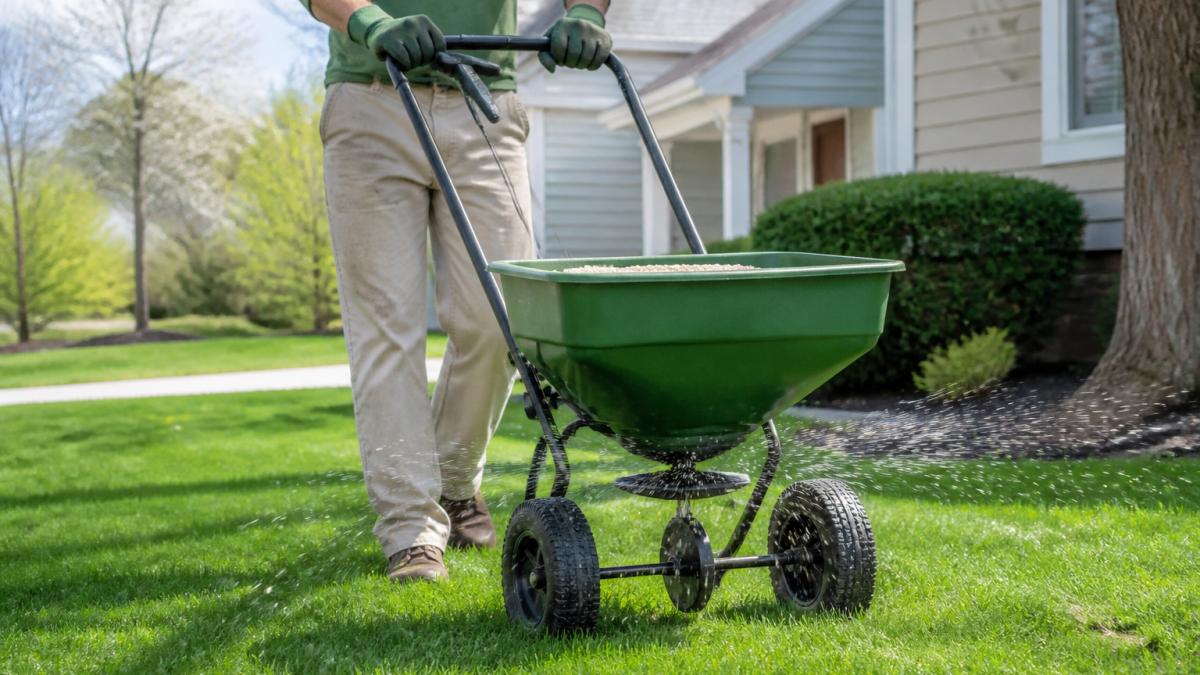
Calibrating your spreader separates a good result from a striped, patchy mess. Most people set the dial once and never check it.
The fix takes ten minutes:
- Weigh out enough fertilizer to cover a set area, like the amount for 1,000 square feet
- Mark a test strip of that size
- Set your spreader to the bag's recommended setting
- Walk the strip at your normal pace
- See how much fertilizer you used
- Adjust the dial up or down and repeat until the amount matches
Common Mistakes to Avoid
The same mistakes show up every spring:
- Fertilizing too early. Feeding a dormant lawn wastes nutrients and can feed weeds instead.
- Applying too much nitrogen at once. This causes fertilizer burn: brown, crispy streaks across the grass.
- Skipping the soil test. You cannot fix a nutrient problem you have not measured.
- Spreading on a wet, muddy lawn. You leave ruts and clump the fertilizer.
- Ignoring spreader calibration. Uneven coverage means stripes and weak spots.
- Fertilizing before heavy rain. Nutrients wash away before the roots ever see them.
A steady, well-timed program beats a heavy-handed one every time. Get the soil temperature right, calibrate your spreader, and let the lawn do the rest.
Frequently Asked Questions
What is the best fertilizer schedule for cool-season grass?
Cool-season grasses like tall fescue and Kentucky bluegrass respond best to a split spring feeding: a light application once soil hits 55°F at 4 inches deep, then a second round four to six weeks later. Keep nitrogen modest in spring so you push root development rather than just top growth. Save your heaviest feeding for early fall, when cool-season grass builds density without heat stress.
Does rain help fertilizer soak into the lawn?
Yes, but timing matters. A light rain of about a quarter inch right after applying granular fertilizer helps granules dissolve and move nutrients to the root zone. Heavy rain within 24 hours can wash nitrogen and phosphorus into storm drains, wasting product and contributing to nutrient runoff. If a downpour is forecast, wait. Watering in with about a quarter inch from a sprinkler works just as well.
Is 10-10-10 fertilizer good for lawns?
It works, but it is rarely the best fit. A 10-10-10 blend delivers equal parts nitrogen, phosphorus, and potassium, and most established lawns already have adequate phosphorus unless a soil test says otherwise. A spring formula closer to 20-5-10 or a slow-release nitrogen product feeds grass without loading up on phosphorus it does not need. Test your soil first so you know what you are actually correcting.
How do I know if my lawn needs fertilizer in the spring?
Look for slow green-up compared to neighboring lawns, thin or patchy turf, pale yellow-green color instead of deep green, and weed pressure filling bare spots. If your lawn stayed green late into fall and greened up early, it may need less than you think. A soil test takes the guesswork out and tells you exactly which nutrients are short before you buy anything.