 ultimate-guide
Lawn Fertilization Schedule for Ohio: Month-by-Month Guide
Table of Contents
- Understanding Ohio Lawn Fertilization Timing
- Ohio Lawn Fertilizer Schedule by Month
- Best Fertilizer for Ohio Grass Types
- How Often to Fertilize a Lawn in Ohio
- Lawn Soil Test and Fertilizer Selection
- Application Timing and Weather Contingencies
- Frequently Asked Questions
Last Updated: October 11, 2026
Understanding Ohio Lawn Fertilization Timing
The lawn fertilization schedule for Ohio depends on your grass type and regional climate. Cool-season grasses dominate Central Ohio lawns, and timing matters far more than the product itself.
Cool-Season Grass and Soil Temperature
Cool-season grasses thrive when soil temperatures sit between 50°F and 65°F. Kentucky bluegrass, perennial ryegrass, and tall fescue dominate Ohio lawns and grow most actively in spring and fall. During summer heat, they slow significantly. This growth pattern is the foundation of an effective lawn fertilization schedule for Ohio.
Soil temperature, not calendar date, triggers grass growth. Apply your first fertilizer when soil reaches 50°F consistently in spring, and monitor soil temperature to avoid applying when grass cannot use it effectively.
Why Timing Matters in Central Ohio
Ohio's climate creates distinct seasonal windows for fertilization. Missing these windows wastes product and drains your budget, as applying fertilizer when grass is dormant or stressed is ineffective.
Spring and fall are your most critical periods, offering ideal conditions for nutrient uptake and root development. Summer applications underperform because heat stress limits nitrogen uptake.
Ohio Lawn Fertilizer Schedule by Month
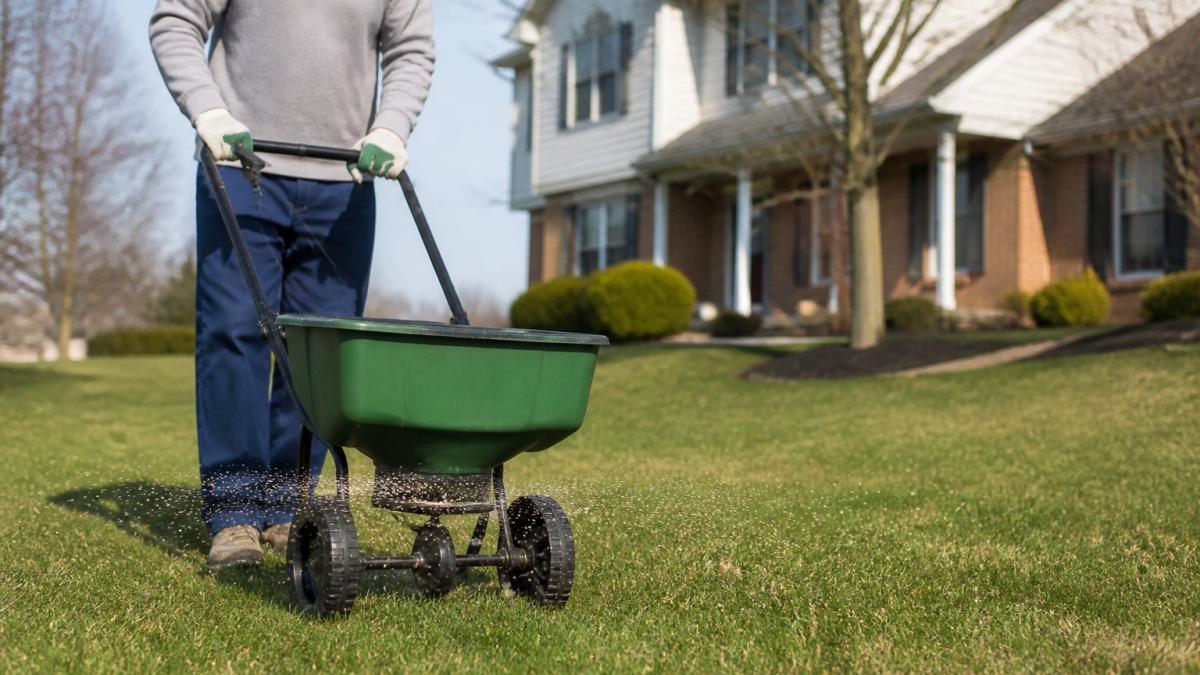
A month-by-month lawn fertilization schedule for Ohio keeps your grass in the active growth window when it matters most. This timeline works for established lawns with cool-season grasses across Central Ohio.
Early Spring (March-April)
Apply your first fertilizer when soil temperature reaches 50°F consistently (typically late March or early April in Ohio). Use moderate nitrogen to fuel green-up and root development after winter dormancy.
Late Spring (May)
Apply your second application in May as grass enters peak growth. A slow-release fertilizer feeds grass gradually and supports root expansion before summer heat stress.
Summer (June-August)
Summer is typically a rest period for fertilization in Ohio. Cool-season grasses slow dramatically when temperatures exceed 75°F, and applying fertilizer during heat stress can harm your lawn. Skip regular applications unless your lawn shows visible nutrient deficiency.
If summer drought occurs, hold off on fertilization. Stressed grass needs water, not nutrients.
Late Summer and Fall (September-October)
Apply your third application in late August or early September as temperatures cool. Fall is when cool-season grass grows most vigorously, making it the second-most important application window after spring.
Late Fall and Winter Prep (November-December)
Apply a winterizer in late October or November, lower in nitrogen, higher in potassium. This strengthens cell walls and improves cold tolerance without pushing soft growth that winter weather would damage.
Timing a winterizer correctly prevents winter damage and positions your lawn for strong spring growth. Applying too early wastes the product; applying too late means grass cannot absorb the nutrients before dormancy.
Best Fertilizer for Ohio Grass Types
Nitrogen Content and Application Rates
Nitrogen drives grass color and growth. Most cool-season grasses in Ohio benefit from 1 to 1.5 pounds of actual nitrogen per 1,000 square feet per application. Actual nitrogen is the percentage listed on the fertilizer label, not the total weight of the bag.
Reading your fertilizer label correctly is essential. A bag labeled 10-10-10 contains 10% actual nitrogen. If you need 1 pound of nitrogen per 1,000 square feet and your lawn is 5,000 square feet, you need 5 pounds of actual nitrogen total. Divide that by the percentage on the label to find how much product to apply.
Slow-Release vs. Quick-Release Fertilizers
Slow-release fertilizers feed grass gradually and reduce burn risk. Quick-release fertilizers deliver nutrients immediately but can damage grass if applied too heavily.
How Often to Fertilize a Lawn in Ohio
Typical Application Frequency
Most Ohio lawns benefit from 3 to 4 applications annually: early spring, late spring, late summer, and late fall. Some lawns do well with just 3 applications if you skip the late-spring dose.
New Lawns vs. Established Lawns
New lawns seeded or sodded in fall need 2 to 3 applications in their first year. New spring lawns benefit from monthly applications through fall. Established lawns typically need 3 to 4 applications.
Lawn Soil Test and Fertilizer Selection
Why Soil Testing Matters
A soil test reveals your lawn's nutrient levels, pH, and organic matter content, removing guesswork and preventing overapplication. A soil test costs $15 to $30 and typically pays for itself by eliminating unnecessary applications.
Ohio State University Extension offers soil testing services through county offices. The results provide nutrient recommendations specific to your lawn's condition and your fertilization goals, making it the most reliable foundation for building a lawn fertilization schedule for Ohio tailored to your property.
How to Obtain and Interpret Your Soil Test
Collecting your sample: Gather soil from 4 to 6 spots across your lawn, 2 to 3 inches deep. Mix in a clean bucket, let dry, and send to your county extension office. Collect samples in fall (September-October) or early spring (March-April) when soil conditions are stable. Avoid sampling immediately after fertilizer application or heavy rain.
Reading your results: Your soil test report will include:
- Soil pH: Most Ohio soils range from 6.0 to 7.0 (slightly acidic to neutral). Cool-season grasses thrive at pH 6.0 to 7.0. If your pH is below 6.0, the report will recommend lime application; above 7.5, sulfur may be suggested.
- Phosphorus (P) and Potassium (K) levels: Reported as parts per million (ppm) or in categories (low, medium, high). The report compares your levels to recommended ranges for lawn grass.
- Nitrogen (N): Not typically reported because it leaches rapidly and changes seasonally. The report provides nitrogen recommendations based on your grass type and desired quality level.
Interpreting recommendations: The report will state fertilizer recommendations as "pounds of actual nutrient per 1,000 square feet per year." For example: "Apply 3 to 4 pounds of nitrogen annually; phosphorus not recommended; potassium 1 to 2 pounds annually." Use these numbers to select a fertilizer product and calculate application rates (see "Nitrogen Content and Application Rates" section for calculation steps).
Ohio Phosphorus Restrictions and Safe Application
Ohio restricts phosphorus in lawn fertilizers sold at retail to protect waterways from algal blooms. Most lawn fertilizers sold in Ohio are labeled "0% phosphorus" or contain phosphorus only if a soil test specifically recommends it. Always check your fertilizer label for compliance with Ohio regulations before purchase.
When applying any fertilizer, follow these runoff-prevention practices:
- Maintain buffer zones: Do not apply fertilizer within 10 feet of storm drains, streams, or water features.
- Activate with water: Water your lawn lightly within 48 hours of application to move granules into soil.
- Avoid application before rain: Do not apply if heavy rain (over 0.5 inches) is forecast within 24 hours.
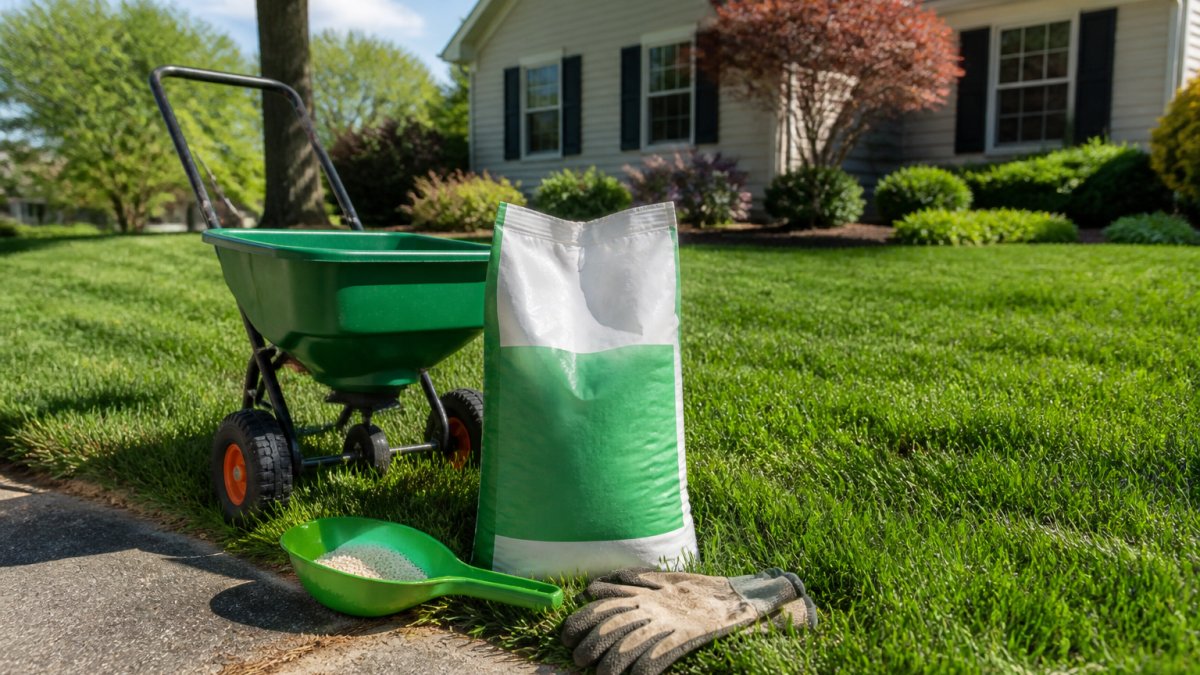
- Calibrate your spreader: Test your spreader on a driveway first to verify coverage width and rate.
- Sweep pavement: Sweep any fertilizer from driveways, sidewalks, or streets back onto the lawn immediately.
Following these practices protects local water quality while ensuring your fertilizer investment reaches your lawn, not storm drains.
Application Timing and Weather Contingencies
Soil Temperature as Your Primary Timing Guide
Soil temperature, not calendar date, is the most reliable trigger for fertilizer application. Cool-season grasses activate growth when soil reaches specific temperature thresholds, regardless of the month.
Spring application window: Apply your first fertilizer when soil temperature reaches 50°F consistently for 3 to 5 consecutive days.
Fall application window: Apply your third application when soil temperature drops to 60°F, typically in late August or early September. Soil temperature is more reliable than calendar date because fall weather is variable.
Winterizer application window: Apply in late October or November when soil temperature is between 50-60°F. This allows grass to absorb potassium before dormancy without pushing soft growth that winter weather would damage.
Regional Timing Differences Within Ohio
Ohio's climate varies significantly by region, affecting fertilization timing:
- Northern Ohio (Cleveland, Toledo area): Soil warms 7 to 10 days later than Central Ohio in spring. Expect 50°F in mid-to-late April. Fall cooling occurs 5 to 7 days earlier.
- Central Ohio (Columbus area): Use the standard schedule outlined in "Ohio Lawn Fertilizer Schedule by Month" as your baseline.
- Southern Ohio (Cincinnati area): Soil warms earlier in spring (late March) and cools later in fall (mid-September).
When in doubt, monitor your lawn's growth stage rather than relying on regional averages. Grass that shows new leaf blade emergence is ready for spring fertilizer; grass that resumes vigorous growth after summer dormancy is ready for fall applications.
Grass-Type Precision: Timing for Kentucky Bluegrass, Perennial Ryegrass, and Tall Fescue
While all cool-season grasses share similar growth patterns, subtle differences affect fertilization timing:
- Kentucky bluegrass: Most cold-tolerant and begins growth at 48-50°F. Prioritize fall applications to support its deep root system.
- Perennial ryegrass: Responds rapidly to spring fertilizer and benefits from robust late-spring applications (May). A winterizer application is especially important.
- Tall fescue: Tolerates heat and drought better than other cool-season grasses. Often performs adequately with just 3 applications annually (early spring, fall, winterizer).
If you're unsure of your grass type, collect a sample and have your local extension office identify it. Knowing your specific grass type allows you to fine-tune timing and rates for better results.
Weather Contingencies and Missed-Application Decisions
Heavy rain after application: If rain occurs within 24 hours of applying granular fertilizer, the application is still effective, water activates the product.
Drought or dry conditions: Water your lawn deeply (1 to 1.5 inches) within 48 hours of application to activate the product.
Heat stress (temperatures above 85°F): If a heat wave occurs during your planned late-spring or early-summer application window, delay fertilization.
Missed late-spring application: If you miss your May application, skip it and resume with your fall application on schedule.
Missed fall application: Fall is the most critical application window for cool-season grass.
Missed winterizer application: If you miss your late-October or November winterizer, do not apply in December or later. Grass is dormant and cannot absorb nutrients.
Frequently Asked Questions
What is the best lawn fertilization schedule for Ohio?
Ohio lawns benefit from 4-5 applications per year timed to cool-season grass growth cycles. Apply in early spring (when soil reaches 50°F), late spring, late summer, and fall. A winterizer application in late fall strengthens roots for spring. The exact timing depends on your grass type and local soil conditions, so soil testing helps refine your schedule.
When should I fertilize my lawn in spring?
Begin your lawn fertilization schedule in early spring once soil temperature reaches 50°F, typically in March or early April. This timing supports grass green-up and active growth as temperatures warm. A second spring application in May sustains growth before summer stress. Avoid fertilizing too early when soil is still cold, as grass roots won't absorb nutrients effectively.
How often should I fertilize a cool-season lawn?
Cool-season grasses like Kentucky bluegrass, perennial ryegrass, and tall fescue thrive with 4-5 applications spaced 6-8 weeks apart. Peak growth occurs in spring and fall, so concentrate heavier applications during these periods. Summer applications should be lighter to avoid stress during heat. A soil test reveals nutrient deficiencies and helps you avoid over-fertilizing.
What fertilizer is best for Ohio grass?
Select slow-release fertilizers with balanced nitrogen content suited to your grass type. Look at the fertilizer label for the actual nitrogen rate, typically 0.5-1 pound per 1,000 square feet per application for established lawns. Avoid high-phosphorus products unless a soil test confirms deficiency; Ohio regulations restrict phosphorus to prevent runoff. A soil test pinpoints exact nutrient needs for your lawn.
Should I fertilize before or after overseeding?
Fertilize after overseeding once new grass is established and mowed 2-3 times. Applying fertilizer before seeding can burn new seedlings. Wait 4-6 weeks post-overseeding to allow roots to develop, then apply a balanced fertilizer to support growth. Coordinate overseeding timing with your lawn fertilization schedule to avoid conflicts.
How do I know how much fertilizer my lawn needs?
A soil test from your local extension office reveals nutrient levels and pH, guiding exact fertilizer rates. Check the fertilizer label for actual nitrogen content and calculate based on your lawn area in square feet. Most established lawns need 0.5-1 pound of actual nitrogen per 1,000 square feet per application. New lawns may need slightly higher rates; low-input lawns benefit from lighter, less frequent applications.